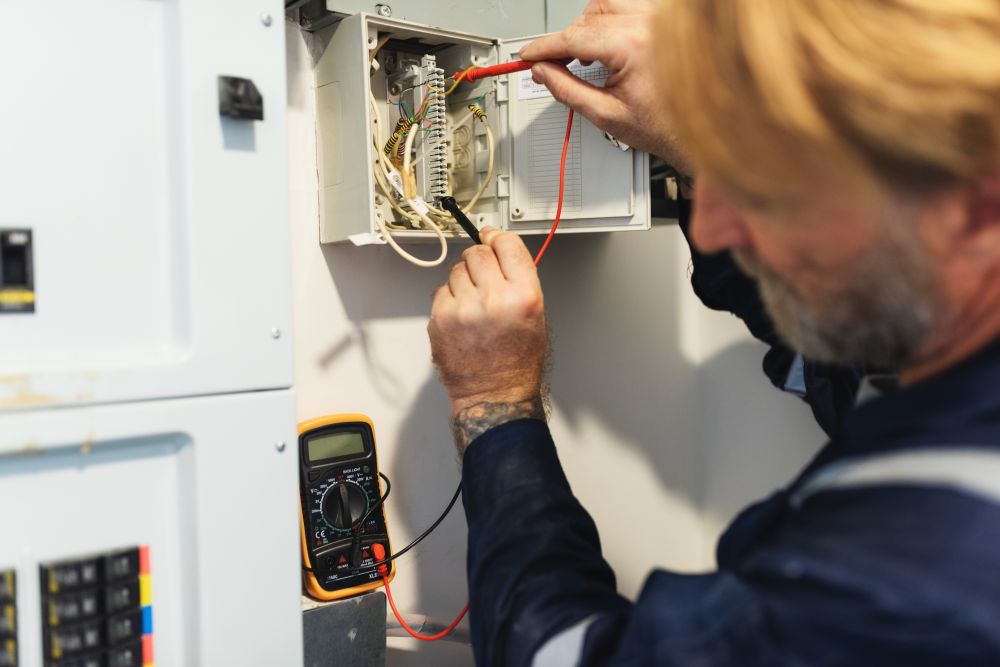
In the natural world, organisms have evolved intricate mechanisms to detect danger before it manifests as harm. The monarch butterfly tastes with its feet, testing plant surfaces for chemical signatures before laying eggs. Similarly, electrical testing represents humanity’s evolved response to the invisible hazards flowing through our built environment, a systematic approach to sensing degradation and defects before they cascade into catastrophic failure. Just as natural selection refined biological detection systems over millions of years, Singapore’s electrical testing protocols emerged through decades of refinement, each iteration incorporating lessons learned from past failures.
The Ecology of Electrical Systems
Consider an electrical installation as an ecosystem, a complex network of conductors, insulators, and protective devices functioning in delicate balance. Like any ecological system, electrical networks exist in dynamic equilibrium, constantly responding to stresses:
- Temperature fluctuations cause expansion and contraction
- Humidity penetrates protective barriers
- Mechanical vibrations loosen connections
- Chemical processes degrade insulation materials
Without regular electrical testing to assess system health, these gradual changes accumulate silently until reaching critical thresholds where failure becomes inevitable. The regulatory framework governing electrical testing in Singapore acknowledges this reality. After completion of electrical installations, the LEW is required to apply to SP Group for inspection and testing of the installations to ensure they have been installed correctly and are safe and fit for operation before electricity supply can be turned on.
Systematic Observation and Measurement
Professional electrical testing follows methodologies reminiscent of field biology, systematic observation guided by established protocols yet requiring interpretive judgment. The licensed electrical worker conducting tests occupies a role analogous to the field researcher, equipped with specialised instruments yet dependent upon experience and knowledge to distinguish normal variation from pathological deviation.
The testing sequence proceeds through hierarchical stages, each revealing different aspects of system integrity:
- Continuity testing verifies that protective conductors maintain unbroken pathways, essential for fault current diversion
- Insulation resistance measurements detect deterioration in materials separating energised conductors from earth
- Earth fault loop impedance tests confirm that protective devices will operate within specified time parameters
- Residual current device functionality checks ensure that leakage detection systems respond appropriately
- Polarity verification confirms correct phase and neutral conductor connections throughout the installation
Each measurement generates quantitative data that must be interpreted against established thresholds. Like enzyme activity levels indicating metabolic health in living organisms, these electrical parameters reveal the functional status of the installation under examination.
Temporal Dynamics of Testing Requirements
Singapore’s electrical testing regime recognises that different installation types experience varying rates of degradation. Electrical installations at construction sites must be inspected monthly, while those in public areas and HDB estates’ common areas must be inspected at least once every six months. This differential timing mirrors ecological monitoring strategies where vulnerable or rapidly changing systems demand more frequent observation than stable environments.
High voltage installations necessitate annual electrical testing at minimum, reflecting both their criticality and the accelerated stress experienced by equipment operating at elevated voltage levels.
The Instrumentation of Detection
Modern electrical testing employs sophisticated instruments that extend human sensory capabilities far beyond unaided perception:
- Insulation testers generate voltages up to several thousand volts whilst measuring leakage currents in microamperes
- Earth resistance meters inject alternating current into ground electrodes whilst measuring resulting voltage drops
- Thermal imaging cameras detect temperature variations invisible to human vision, revealing loose connections through infrared signatures
These instruments function as prosthetic sensory organs, allowing practitioners to perceive phenomena occurring at scales and frequencies beyond biological detection thresholds. The marriage of human judgment with instrumental precision produces electrical testing outcomes more reliable than either component alone could achieve.
Professional Competence as Adaptive Advantage
The effectiveness of electrical testing depends critically upon practitioner competence. Singapore addresses this through licensing requirements ensuring that only qualified individuals conduct testing and interpret results. Licensed electrical workers must understand not merely how to operate test instruments but how to contextualise measurements within broader system behaviour. Marginal insulation resistance values that might be acceptable in one environmental context could indicate imminent failure in another. This interpretive capability, developed through education and experience, distinguishes professional electrical testing from mere mechanical procedure.
Consumer Product Testing as Protective Barrier
Parallel to installation testing runs the regime governing electrical appliances destined for consumer use. Controlled Goods must be tested to specified safety standards and affixed with the SAFETY Mark before they can be sold in Singapore, including testing for safety measures against fire, electric shock, explosion and other hazards.
Laboratory electrical testing of consumer products examines multiple failure modes, subjecting samples to stresses exceeding normal operating conditions. This accelerated testing reveals weaknesses that might not manifest during typical use but could appear under adverse circumstances.
The Integration of Testing into Maintenance Ecology
Professional electrical testing exists not as isolated event but as component within comprehensive maintenance programmes. Key benefits include:
- Test results inform decisions about repair, replacement, and operational modifications
- Trending of measurements over time reveals degradation trajectories
- Predictive interventions become possible before failure occurs
Just as field biologists track population dynamics to predict ecosystem changes, electrical professionals analyse testing data to forecast system behaviour. Both disciplines recognise that present conditions emerge from past history and will shape future states, making systematic observation essential for informed stewardship.
Through methodical application of measurement and analysis, electrical testing establishes the empirical foundation upon which safe electrical system operation rests, a human adaptation to the hazards inherent in harnessing electromagnetic forces for civilisation’s purposes.