
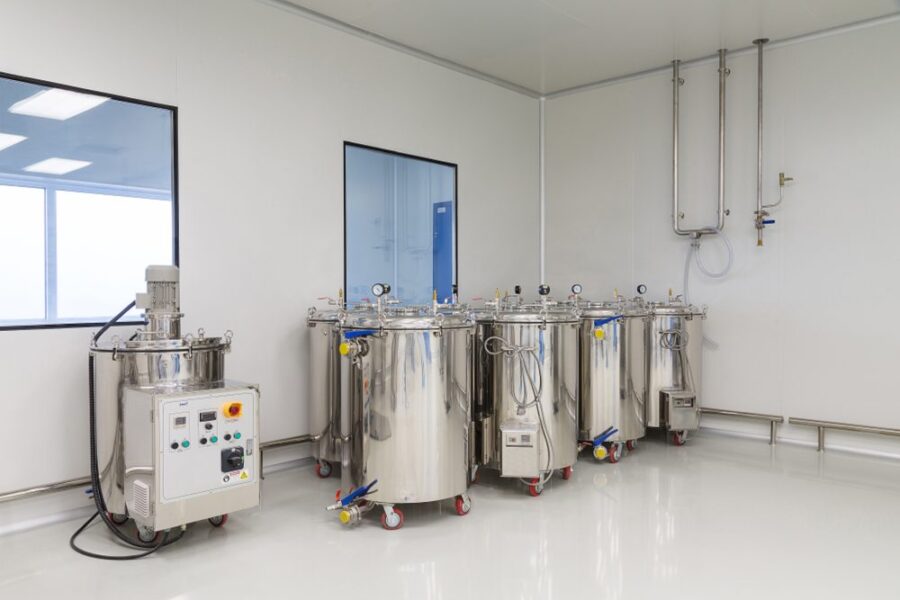
A drum filling machine Singapore manufacturers and industrial operators select determines not just how fast drums are filled, but how accurately, how safely, and how reliably the filling operation supports the rest of the production and distribution chain.
The Drum as an Industrial Packaging Standard
The standard 200-litre steel or plastic drum is one of the most widely used liquid packaging formats in global industrial commerce. Its dimensions, closure types, and handling requirements are standardised under international norms, which means that a drum filled in Singapore can be handled, stored, and discharged using equipment and procedures understood by logistics and end-user operations in the world.
This standardisation is the drum’s primary commercial advantage. But for the facility filling thousands of drums per year, the filling equipment must match the standard as precisely as the container does. A drum filling machine that delivers inconsistent fill weights, struggles with the viscosity range of the products it handles, or requires frequent recalibration is a liability in a production environment where consistency and uptime are operational requirements.
Choosing Fill Technology for the Product
No single filling technology is appropriate for every liquid product filled in drums. The selection must account for viscosity, temperature sensitivity, corrosiveness, and fill weight requirements:
- For low-viscosity liquids such as water-based chemicals, solvents, and thin oils: gravity or positive displacement pump filling systems deliver adequate flow rates and accuracy
- For medium-viscosity liquids such as heavier lubricants, polymers, and thick concentrates: progressive cavity pumps or gear pumps provide the positive displacement and back-pressure capability that gravity systems cannot
- For high-viscosity products, including greases, resins, and pastes, heated fill heads and specialised pump technology are required to maintain product flow at acceptable fill rates
Drum filling machine Singapore suppliers who understand this product-technology matching can save a buyer from the expense of purchasing equipment that underperforms for their specific material.
Weight-Based Accuracy as the Industry Standard
Weight-based drum filling has become the industrial standard for good reason. The principle is straightforward: the drum sits on a platform with integrated load cells, the control system reads the gross weight at the start of the fill cycle, adds the target net fill weight, and closes the fill valve when the sum is reached.
This approach is independent of product density variation, temperature fluctuation, and the physical characteristics that cause volume-based systems to produce inconsistent results across production runs. For regulated products – food-grade liquids, pharmaceutical intermediates, and hazardous chemicals – the audit trail provided by weight-based filling data meets the documentation requirements of quality management systems.
The accuracy achievable with quality load cells and responsive valve control is typically within plus or minus 0.1 percent of the target fill weight, which meets commercial and regulatory tolerance requirements for the vast majority of industrial drum filling applications.
Production Environment Considerations
A drum filling machine operates in an industrial environment that presents challenges different from laboratory or light commercial settings:
- Dust and chemical vapour exposure can affect sensitive electronics if the machine is not appropriately rated and sealed
- Temperature variation between morning startup and midday operation affects load cell readings and product viscosity
- Operator interactions with the machine in a gloved or suited condition require control interfaces that are legible and operable under those conditions
- The physical handling of 200-litre drums requires either mechanical drum handling assistance or a clear ergonomic design of the fill station
Industrial liquid drum filling equipment built to industrial protection ratings, with robust construction and interfaces designed for the production floor rather than the office, performs more reliably in these conditions than equipment designed for lighter-duty applications.
Maintenance for Continuous Production Uptime
A drum filling machine in a production facility may complete several hundred fill cycles per day across two or three shifts. The cumulative operating hours at this intensity demand a structured maintenance schedule:
- Weekly: calibration check of the weighing system against reference weights; inspection of fill tube and valve for product buildup
- Monthly: lubrication of mechanical components; inspection of load cell connections and control panel
- Quarterly: full recalibration of the weighing system; inspection of pump components and seals
- Annually: professional service of all mechanical and electronic components
“Maintenance is the respect you show to the machines that keep your operation running.” – Lee Kuan Yew.
Accurate drum filling solutions maintained with this kind of disciplined schedule retain their accuracy and reliability through years of demanding production use. Drum filling machine Singapore operations invest in properly, with appropriate maintenance and local technical support, pays its cost back through consistent performance long after the initial investment is made.