
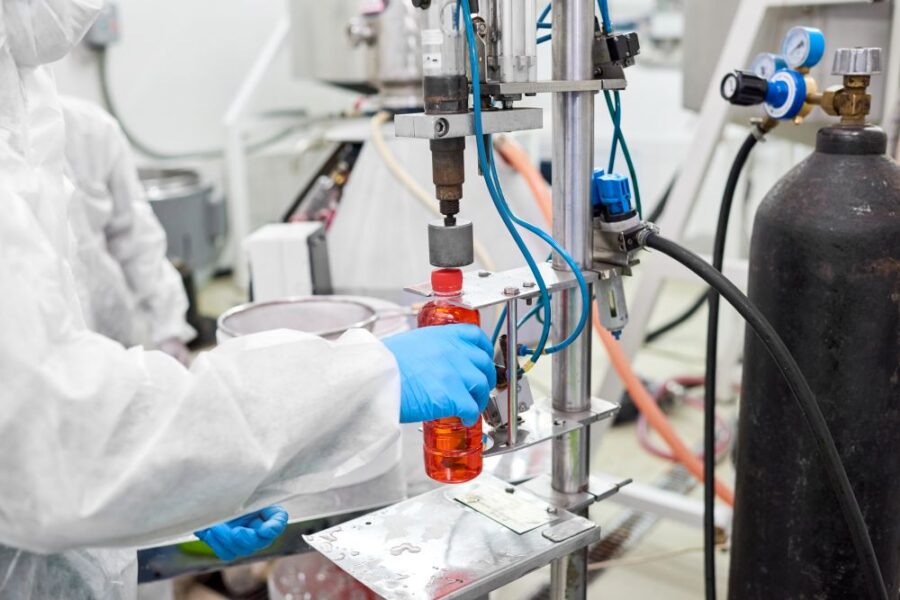
The filling and capping machine represents one of industry’s most elegant examples of mechanical symbiosis, where two distinct yet complementary processes unite to create a whole greater than the sum of its parts. In the grand theatre of manufacturing evolution, these integrated systems have emerged as the dominant species in beverage, pharmaceutical, and consumer goods production, demonstrating remarkable adaptive efficiency that would make any evolutionary biologist take notice.
The Anatomy of Industrial Cooperation
Much like the intricate partnerships observed in nature, the cleaner fish and reef shark, the oxpecker and rhinoceros, the filling and capping machine have evolved a mutually beneficial relationship that optimises both speed and precision. The filling mechanism serves as the primary producer in this industrial ecosystem, whilst the capping component acts as the protective guardian, ensuring product integrity and sterility.
These dual-function systems operate on principles that mirror the sophisticated coordination found in colonial organisms. Each component maintains its specialised function whilst contributing to the collective success of the operation. The precision timing required between filling and capping phases resembles the synchronised behaviour observed in insect colonies, where individual actions serve the greater organisational purpose.
Classification of Integrated Systems
Linear Filling and Capping Systems: The Methodical Processors
Linear integrated systems represent the methodical workers of the manufacturing world, processing containers in a sequential, orderly fashion reminiscent of ant columns traversing their established pathways. These systems excel in controlled environments where precision takes precedence over speed, typically handling 50-500 containers per hour depending on product viscosity and closure complexity.
The characteristics that define linear integrated systems include:
-
Sequential processing: Containers move through filling and capping stations in predetermined order
-
Precise volume control: Servo-driven filling mechanisms ensure consistent product delivery
-
Gentle handling: Reduced mechanical stress on containers, particularly beneficial for glass packaging
-
Easy maintenance access: Individual components remain accessible for cleaning and adjustment
-
Flexible changeover: Adaptability to different container sizes and closure types
Rotary Filling and Capping Systems: The High-Performance Athletes
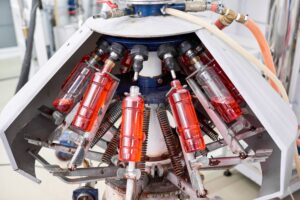
At the apex of integrated system evolution, rotary filling and capping machines demonstrate the kind of high-performance coordination found in the most successful predators. These systems can process thousands of containers per hour, their circular motion creating a continuous flow that maximises throughput whilst maintaining precision.
Singapore’s beverage manufacturing sector has particularly embraced these high-speed integrated systems, with facilities reporting remarkable efficiency gains. “The implementation of advanced rotary filling and capping lines has enabled us to achieve 99.7% efficiency rates whilst reducing contamination risks by 60%,” according to recent industry analysis from the region’s soft drink production facilities.
The Ecosystem Dynamics of Integration
Environmental Pressures and Adaptation
Like species adapting to environmental challenges, modern filling and capping systems have evolved sophisticated responses to regulatory pressures, quality demands, and operational constraints. Pharmaceutical applications require absolute sterility, leading to the development of isolator-based systems that create controlled environments comparable to the sterile chambers found in certain plant reproductive structures.
Food and beverage applications demand different adaptations entirely. Here, the systems have evolved rapid changeover capabilities, allowing manufacturers to switch between products with minimal downtime—a flexibility that mirrors the behavioural adaptations of opportunistic feeders in nature.
Quality Control: The Immune System Response
Integrated filling and capping systems have developed sophisticated quality control mechanisms that function much like biological immune systems. Vision inspection systems detect improperly filled containers or incorrectly applied closures, rejecting defective products before they enter the distribution chain.
These quality control adaptations include:
-
Fill level detection: Laser-based sensors monitor liquid levels with micrometre precision
-
Cap presence verification: Optical systems confirm proper closure placement and orientation
-
Torque monitoring: Sensors ensure optimal closure tightness without over-application
-
Contamination detection: Advanced cameras identify foreign particles or container defects
-
Leak testing: Pressure decay testing validates package integrity
Technological Evolution and Future Adaptations
Industry 4.0: The Next Evolutionary Leap
The integration of digital intelligence into filling and capping systems represents a significant evolutionary advancement, comparable to the development of complex nervous systems in higher organisms. These smart systems collect and analyse operational data in real-time, making autonomous adjustments to maintain optimal performance.
Predictive maintenance capabilities allow these systems to anticipate component wear and schedule maintenance before failures occur—a form of technological prescience that surpasses even the most sophisticated biological early warning systems.
Sustainability Adaptations
Environmental pressures are driving the evolution of more sustainable filling and capping technologies. Energy-efficient servo motors, reduced air consumption systems, and recyclable component materials reflect the same adaptive responses we observe in organisms facing resource constraints.
The Collaborative Advantage
Human-Machine Partnerships
The most successful filling and capping installations demonstrate the same collaborative principles found in successful ecosystem partnerships. Skilled operators work in harmony with automated systems, providing oversight and intervention when necessary whilst allowing the machinery to perform its specialised functions autonomously.
Training programmes for these integrated systems typically require 40-80 hours of instruction, creating the knowledge foundation necessary for optimal human-machine collaboration. This investment in operator education proves as crucial to system success as the mechanical components themselves.
Economic Symbiosis
The financial benefits of integrated filling and capping systems extend beyond simple cost reduction. These systems create value networks that benefit multiple stakeholders—reduced labour requirements, improved product consistency, enhanced safety, and increased production capacity all contribute to a thriving economic ecosystem.
The Evolutionary Imperative
As we observe the continuing evolution of manufacturing technology, integrated filling and capping systems stand as exemplars of successful adaptation and cooperation. Their ability to combine precision, speed, and reliability whilst maintaining flexibility for future modifications ensures their continued dominance in the industrial landscape. The sophisticated coordination achieved by the modern filling and capping machine demonstrates that the principles governing natural selection apply equally well to the realm of mechanical innovation, creating systems that embody the very essence of evolutionary success.